Newsletter Subscribe
Enter your email address below and subscribe to our newsletter

 ByJohn A
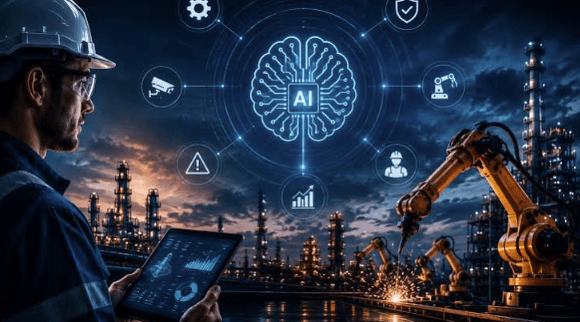
AI-powered monitoring blends sensor data, video streams, and machine learning to assess risk in real time. It emphasizes rapid anomaly detection, contextual alerts, and proactive interventions while preserving safety margins. Robust data governance and transparent workflows underpin trust and accountability. Adoption depends on data quality, governance standards, and seamless integration with existing processes. The approach offers measurable safety gains, yet practical challenges remain—data silos, model drift, and governance maturity must be addressed before full scale.
Artificial intelligence-powered monitoring refers to the use of sensor data, computer vision, and machine learning to observe and analyze industrial processes and environments in real time. This approach enables continuous risk assessment, rapid anomaly detection, and proactive control.
Key considerations include AI ethics, data governance, AI integration, and human factors, ensuring transparent, accountable, and user-centered safety improvements.
Real-time analytics detect hazards before they strike by continuously ingesting sensor data, video streams, and operational logs to identify precursors and patterns indicative of emerging risk. The approach emphasizes predictive sensing, alerting when thresholds are crossed and enabling proactive interventions.
Results depend on workflow integration, data quality, and disciplined monitoring, ensuring timely decisions without compromising operational autonomy or safety margins.
Implementing AI in Industrial Safety: Data, Models, and Governance describes a structured approach to deploying AI-enabled safety systems with rigorous attention to data integrity, model lifecycle, and governance controls. It emphasizes disciplined data governance and verifiable model transparency, ensuring risk-aware deployments. The framework promotes repeatable processes, auditability, and safeguards, enabling responsible adoption while maintaining operational autonomy and freedom within safety-critical environments.
The process emphasizes trust building through transparent alert workflows and documented decision criteria, reducing ambiguity.
Adherence to governance standards ensures consistent evaluation, accountability, and risk-aware escalation, enabling scalable adoption while continuously refining models, thresholds, and responses for resilient industrial safety outcomes.
Data privacy is safeguarded through protective governance, robust access controls, comprehensive audit trails, and strong encryption; safeguards are evaluated methodically, risk-focused, and designed to preserve autonomy while ensuring compliant, transparent monitoring workflows.
Failure modes include miscalibration, data drift, adversarial inputs, and sensor failure; these undermine reliability. Safety certification requires rigorous verification. Juxtaposed against envisioned reliability, gaps emerge, highlighting risk, accountability, and the need for ongoing monitoring in autonomous systems.
ROI measurement methods and safety deployment metrics are employed to quantify value; a methodical, risk-focused approach compares incident reductions, near-miss rates, downtime, and cost savings, while adjusting for implementation risk, data quality, and maintenance obligations.
Skilled roles include data scientists, safety engineers, risk assessors, data governance officers, and compliance specialists; collectively they coordinate risk assessment, ensure data governance, validate models, and translate insights into mitigations while preserving autonomy and operational freedom.
See also: AI in Industrial Process Optimization
Investigations suggest AI can improve rare incident prediction and high risk anomaly detection by continuous simulation and rapid scenario testing; systems quantify uncertainty, trigger predefined responses, and enable prudent autonomy while operators retain oversight for freedom and accountability.
In a coincidental alignment of data streams and human judgment, the system’s alerts mirror reality with measured precision. Real-time analytics forewarns of emerging hazards just as maintenance teams arrive at a scene, ready to intervene. Governance and transparent models anchor decisions in reproducible steps, while continuous improvement threads learning from near-misses. The result is a risk-aware culture where safety margins endure, autonomy remains intact, and each intervention closes the loop between detection and safe, auditable action.