Newsletter Subscribe
Enter your email address below and subscribe to our newsletter

 ByJohn A
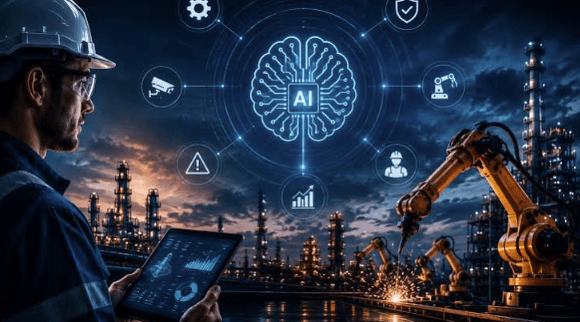
AI in industrial robotics reshapes factory logic through real-time analytics, modular automation, and iterative testing. Vision, sensing, and perception enable autonomous actions, while data pipelines link observations to actionable plans. The approach emphasizes governance, edge training, and risk-aware milestones to balance speed with reliability. Implementations hinge on measurable outcomes and transparent metrics, yet questions remain about integration with legacy systems, workforce impact, and governance at scale. The next step invites closer scrutiny of practical constraints and opportunities.
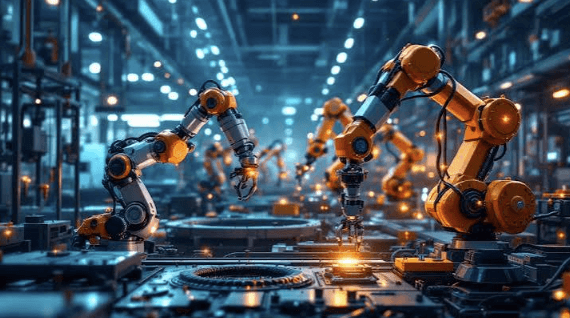
AI-powered robotics transform factory operations by enabling adaptive, data-driven decision making across tasks such as assembly, inspection, and material handling.
The approach emphasizes process optimization through real-time analytics, modular automation, and iterative testing.
It also highlights operator augmentation, where human judgment complements autonomous systems, empowering teams to redefine workflow, reduce variability, and rapidly validate improvements with measurable, repeatable outcomes.
Vision, sensing, and perception form the core enablers of autonomous operation in modern industrial robotics.
The discussion analyzes how vision latency constrains reaction times and how sensing fusion integrates depth, color, and tactile cues to form coherent world models.
Experimental frameworks measure throughput versus accuracy, guiding implementation choices that balance cost, reliability, and scalable autonomy in demanding manufacturing environments.
Turning data into action requires a disciplined integration of planning, control, and maintenance algorithms that translate sensor streams and process metrics into concrete robot behavior.
This examination treats data governance as guardrails for reproducibility and auditability, while edge training enables low-latency adaptation.
The approach prioritizes modularity, verifiable improvements, and transparent experimentation, supporting autonomous yet governed, responsive industrial systems.
Building on the governance and edge-training concepts from the prior topic, this section outlines a practical roadmap for deploying AI in industrial robotics, emphasizing modular integration, measurable milestones, and risk-aware decision points.
The discussion analyzes piloting ethics, safety validation, and iterative testing, pairing rigorous metrics with experimental deployment, ensuring transparent governance and controlled, repeatable progress across integration, monitoring, and performance validation.
Ethical considerations are managed through governance frameworks and ongoing bias mitigation processes, enabling evaluative transparency. The approach experiments with governance metrics, implements bias checks in data pipelines, and iterates controls to uphold safety, accountability, and user autonomy.
A cautious beam of opportunity shines: small- to mid-sized plants can adopt AI-enabled robotics cost-effectively through structured pilot programs and scalable architectures. AI adoption hinges on cost benefit analysis, ROI forecasting, data ethics, and governance.
Interoperability issues arise from inconsistent data models, protocols, and timing; without adherence to interoperability standards, vendor lock in intensifies, complicating integration, testing, and upgrade cycles, while governance and open APIs enable flexible experimentation and cross-vendor implementation.
See also: AI in Industrial Process Optimization
AI governance structures manufacturing entities by defining roles, risk thresholds, and data lineage; implementation relies on iterative audits, modular controls, and traceable decisions. Compliance frameworks guide certification, logging, and remediation, enabling experimentation within governed, auditable boundaries.
Unbelievably, real-world failure case studies reveal brittle systems; recovery strategies hinge on rigorous data labeling challenges, real time monitoring constraints, and iterative testing. The analysis remains analytical, experimental, implementation-focused, yet respects freedom while guiding robust remediation.
In short, AI in industrial robotics promises flawless, autonomous factories—until the vision system vacations, the edge devices misfile logs, and maintenance schedules resemble treasure hunts. The narrative progresses with data pipelines humming and dashboards gleaming, except when the robots pause for “insightful” deliberation at the exact moment a gripper needs calibration. Yet the roadmap persists: ambitious milestones, risk-aware checks, and measurable gains—an elegant choreography of automation that gently reminds humans that perfection remains a moving target.